- Home page
- Tourism
- Entertainment
- The flamenco
- Entertainment
- Tourism
Immersion in the world of flamenco
Automatic translation
The sound of heels, rhythmic guitar music, bursts of voices… Flamenco isn't just experienced on a stage. It's the soul of Seville, an omnipresent force that permeates everything, every street corner. From shop windows to bustling streets, flamenco isn't just watched, it's lived and breathed.
Let's embark together on a journey through this Spanish dance to discover its origins, its different ways of practicing it, and its customs and traditions. Olé!
Understanding flamenco
To understand art, one must look to its roots. Flamenco was born in Andalusia, the fruit of a fascinating cultural fusion. The Roma people, with their traditions, were the cradle of this art, blending it with Moorish and Jewish influences. The result? A raw and intense expression of emotions, from love to loss, from joy to rebellion.
Three inseparable pillars
- The Cante (the song): this is the heart of the performance. Often melancholic, sometimes powerful and devoid of artifice, it expresses the duende, that mysterious emotional force that grips you in the gut.
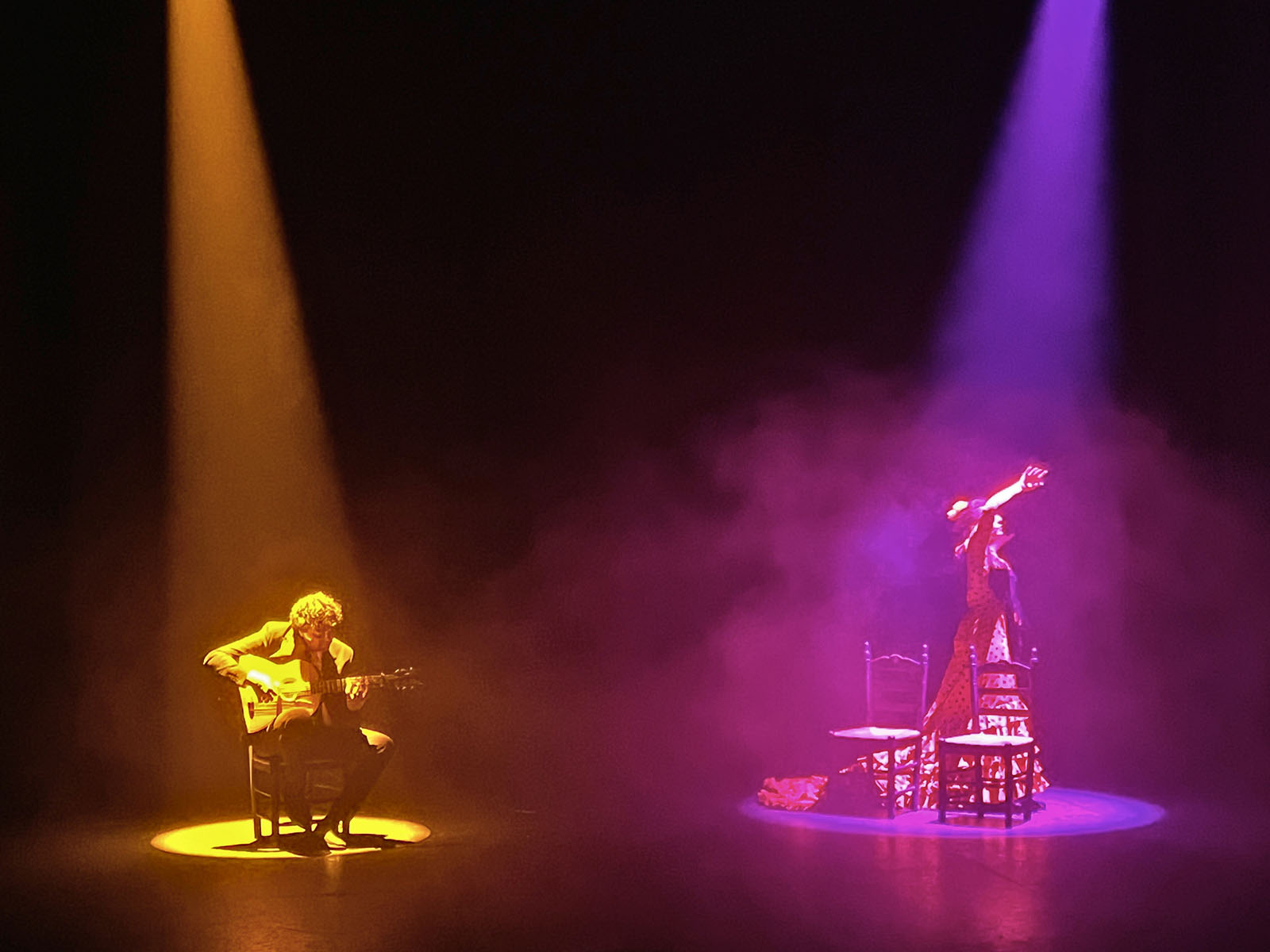
- The Baile (the dance): the dance does not merely guide. It tells the story of the song with incredible intensity and grace. Every movement, every swirl of the dress, and every heel strike—the famous zapateado—is a phrase in a passionate dialogue.
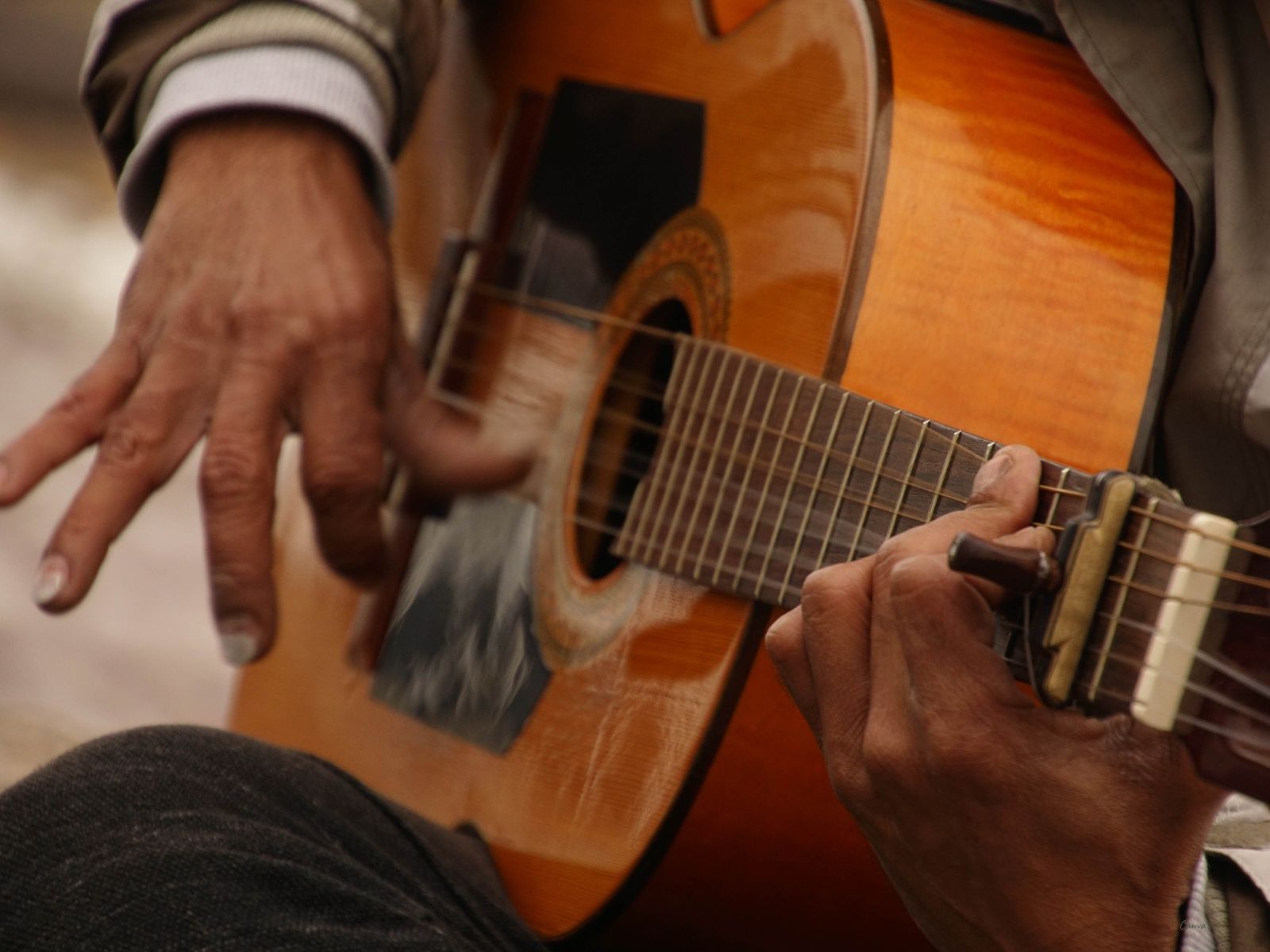
- The guitar : more than just an accompaniment, it is the third pillar of the conversation. The notes swirl, become urgent or delicate, and punctuate the performance with astonishing virtuosity.
The main styles of flamenco
Flamenco is a mosaic of styles, called "palos." There are dozens of them, but some are considered the most important and representative. Here are the seven main ones, generally mentioned as the foundation of flamenco:
- The Soleá : often considered the "heart" or "mother" of flamenco. Its rhythm (compás) is slow and solemn. It is a profound song, expressing solitude, suffering, and sadness. The dance that accompanies it is serious and imbued with great introspection.
- Bulerías : This is the most festive and fastest style of flamenco. With its frenetic pace and freedom of improvisation, it is the soul of parties and gatherings. It is the quintessential "palo" for the end of a performance, when the energy explodes and everyone starts dancing.
- The Alegrías : as their name suggests, these are joyful and vibrant styles originating from Cádiz. Their rhythm is fast and elegant. The Alegrías dance is characterized by grace and virtuosity, often featuring the use of the "bata de cola" (the long-traveled dress).
- Tangos : This is one of the oldest and most fundamental styles of flamenco. Be careful not to confuse it with Argentine tango! Flamenco tango has a strong rhythm and a character that is festive, joyful, and sometimes sensual. It is often found at "fiestas" (festivals).
- The Fandangos : of Andalusian folk origin, the fandango is a passionate dance and song. There are many regional variations, such as the famous "Fandangos de Huelva." Its tempo is in 3/4 time, and it is a very melodic and festive style.
- The Siguiriyas : along with the Soleá, this is one of the most profound "palos" (the "cante jondo"). It expresses intense pain, tragedy, and death. The rhythm is complex, and the singing is poignant, almost a cry. The dance is powerful, restrained, and dramatic.
- Sevillanas : Although considered a separate style, sevillanas are a light and popular style of flamenco, frequently danced in couples. They are inseparable from festivals, especially the Feria de Abril in Seville. They are often the first flamenco dances one learns, as they are more codified and easier to learn.
The must-see flamenco venues in Seville
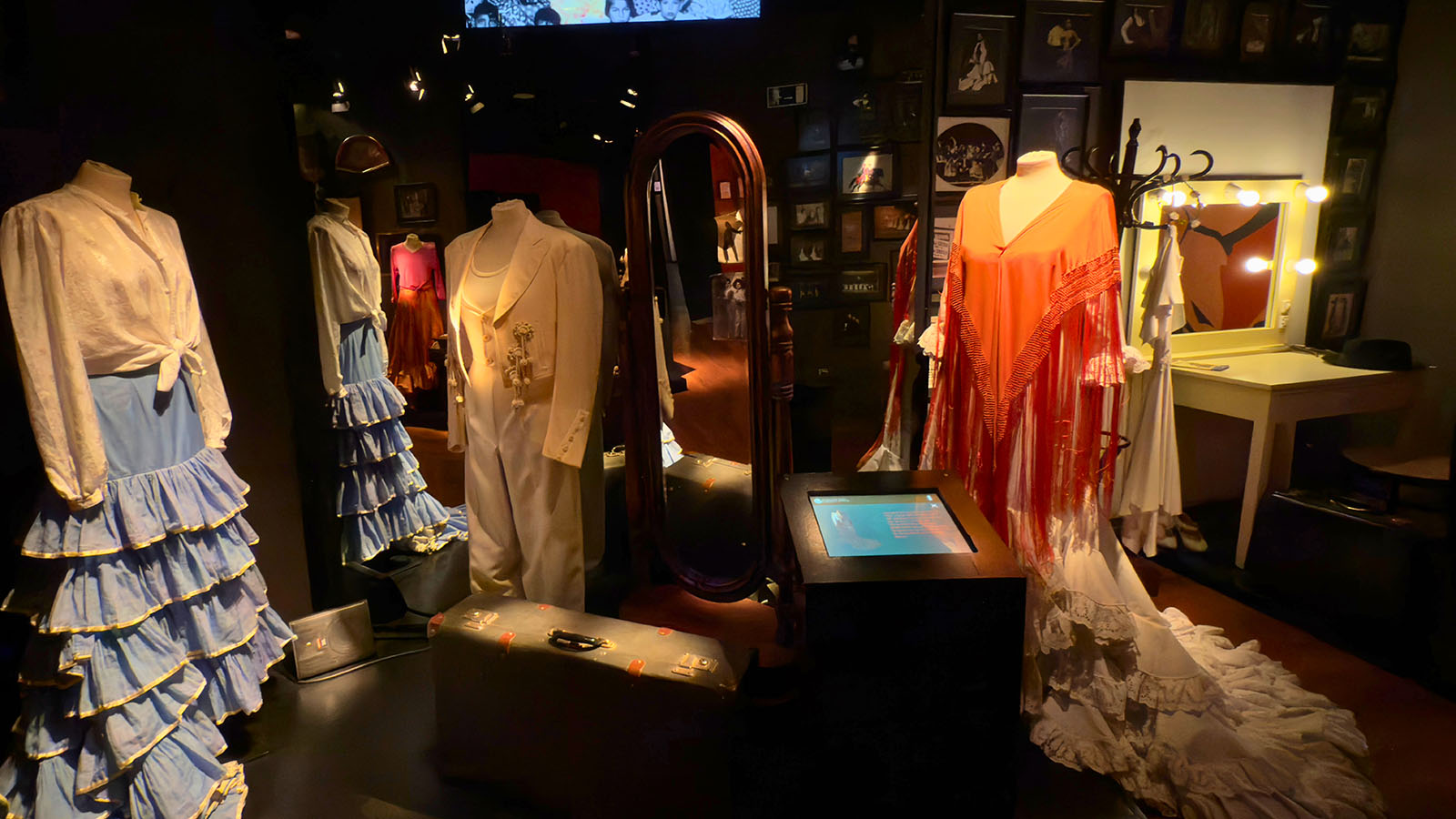
The Flamenco Dance Museum
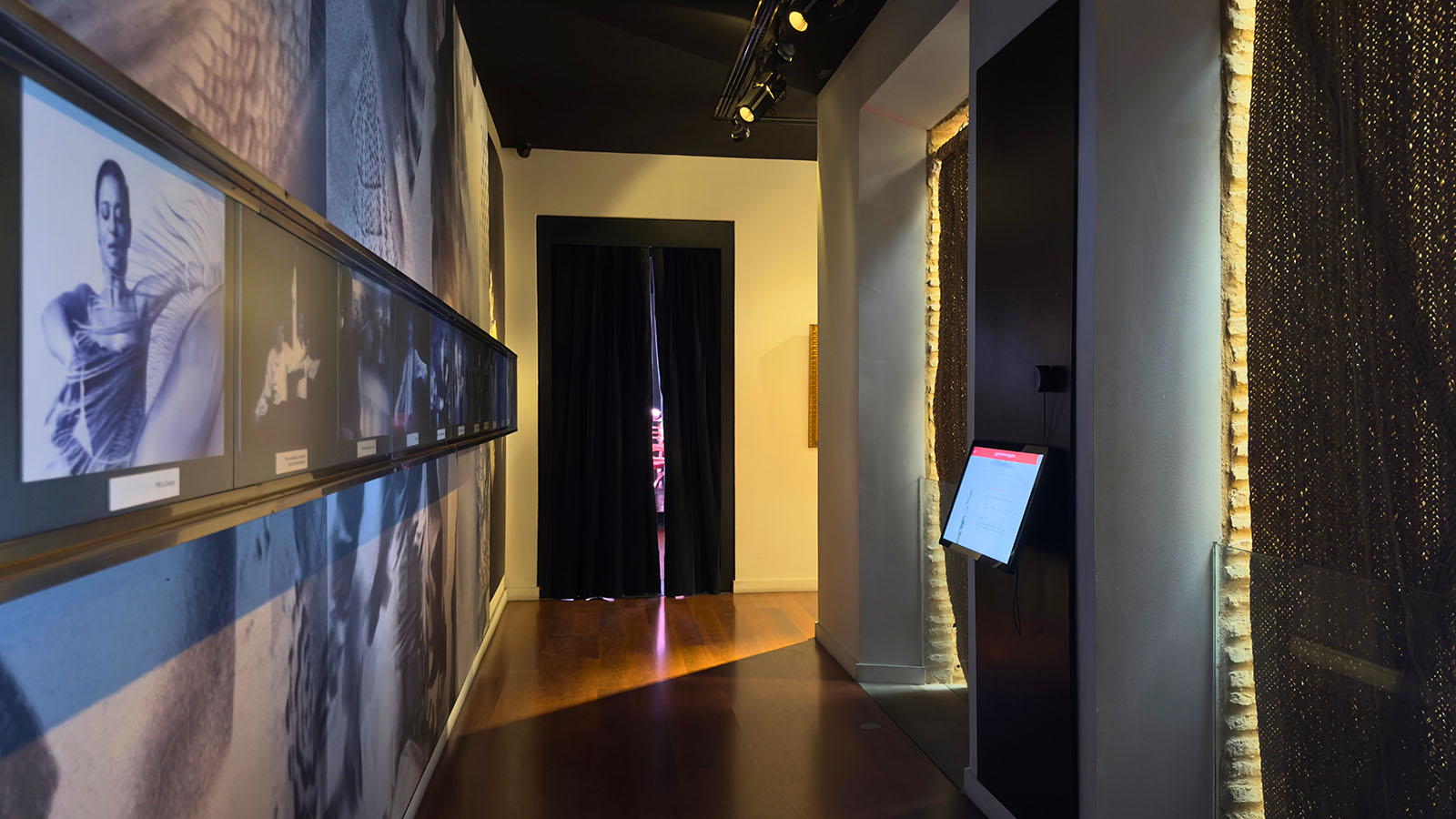
To go beyond the spectacle and understand the depth of this art form, a visit to the Flamenco Dance Museum is essential. This interactive and immersive space traces the history of flamenco through its costumes, instruments, and iconic figures. Visitors learn about the role of each dancer and the importance of each "palo" (dance style). An exhibition on the same theme is also available on the second floor.
The tablaos
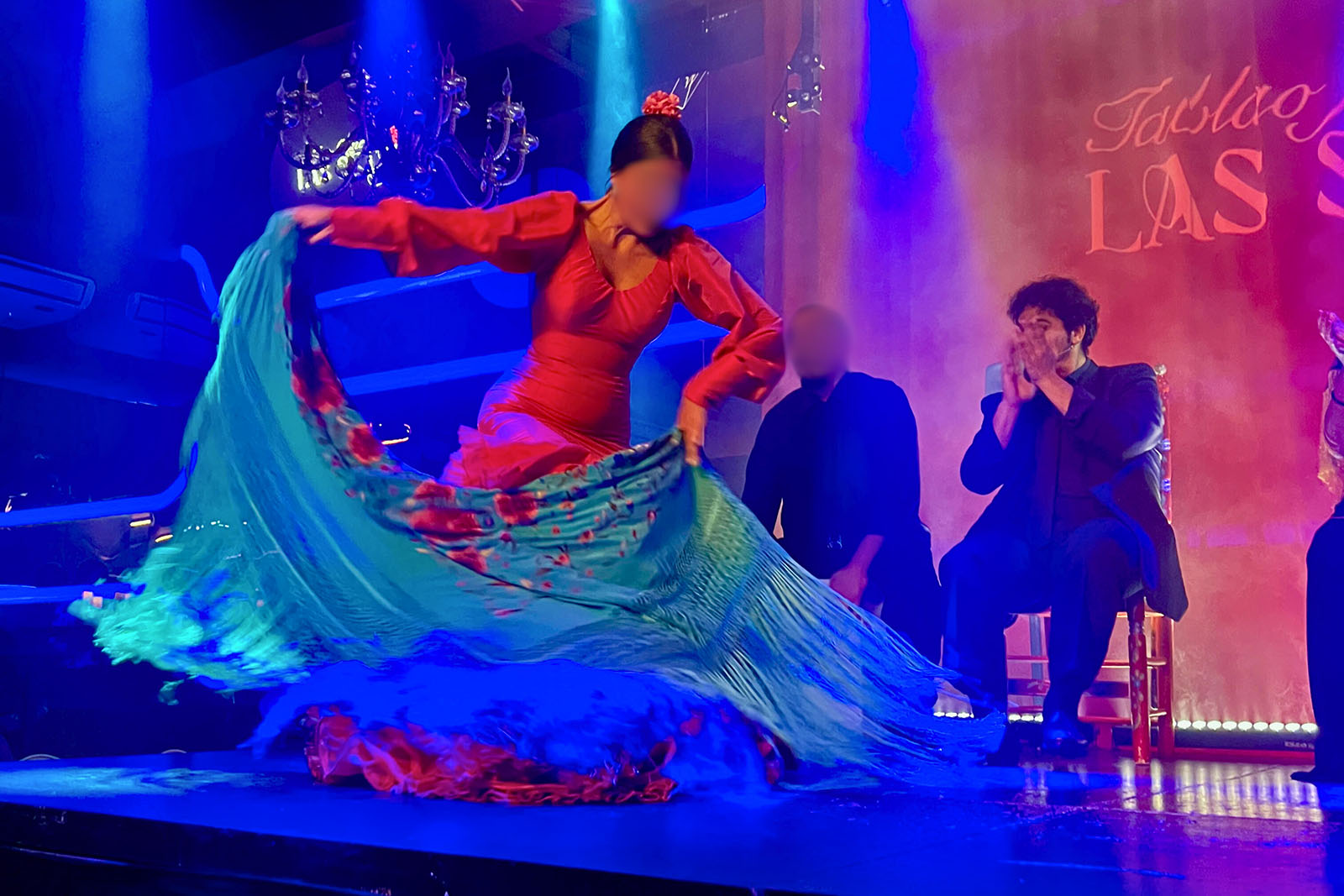
For an even more authentic experience, head to one of the many tablaos. Unlike a large theater, these venues are designed for intimacy. Seated around the stage, you have a front-row seat to see the sweat on the dancer's brow, the intensity in the singer's gaze, and the incredible speed of the fingers on the strings. A shout of "olé" from a spectator, the passionate response from the artists… This is where flamenco truly comes alive.
The April Fair
Seville doesn't just show flamenco, it lives it. It's in the air, in the bursts of laughter, in the impromptu dance steps, and in the festive spirit of the Feria de Abril.
This is one of the rare moments when flamenco leaves the stage to become a popular dance, practiced by everyone. Women wear their magnificent flamenco dresses with ruffles and gather in the casetas, the temporary tents of the festival. It is there that they dance sevillanas and come alive to the infectious rhythms of rumbas and bulerías. Far from the solemnity of tablao performances, the flamenco of the Feria is an explosion of life, color, and shared joy.
Seville is not a postcard setting for this art; it is its refuge, the place where flamenco breathes at every moment. It is not about representation, but about life itself, in its raw state.
Top experiences
Caminito del Rey: a complete guide for an unusual experience in Andalusia