- Home page
- Tourism
- Discover Séville
- Neighborhood by neighborhood
- La Cartuja
- Neighborhood by neighborhood
- Discover Séville
- Tourism
La Cartuja
Automatic translation
The island of La Cartuja, often simply called La Cartuja, is a unique district of Seville, located on an island formed by the arm of the Guadalquivir and the Alfonso XIII canal. Its history is divided into two major periods: that of devotion and earthenware, centered around its eponymous monastery, and that of dazzling modernity, inherited from the Universal Exposition of 1992 (Expo 92).
Today, La Cartuja is a hub for innovation, leisure and culture, far from the hustle and bustle of the historic center.
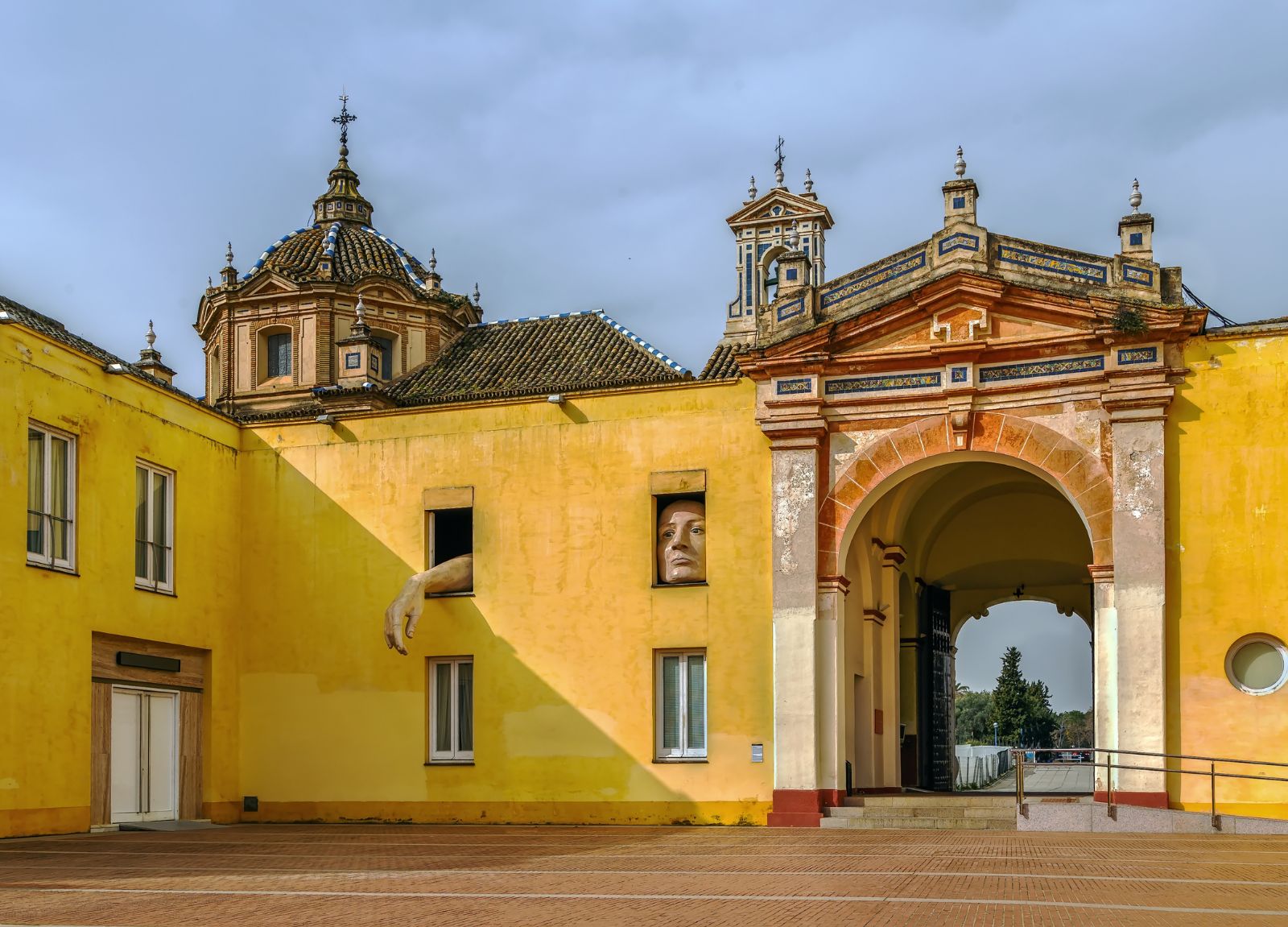
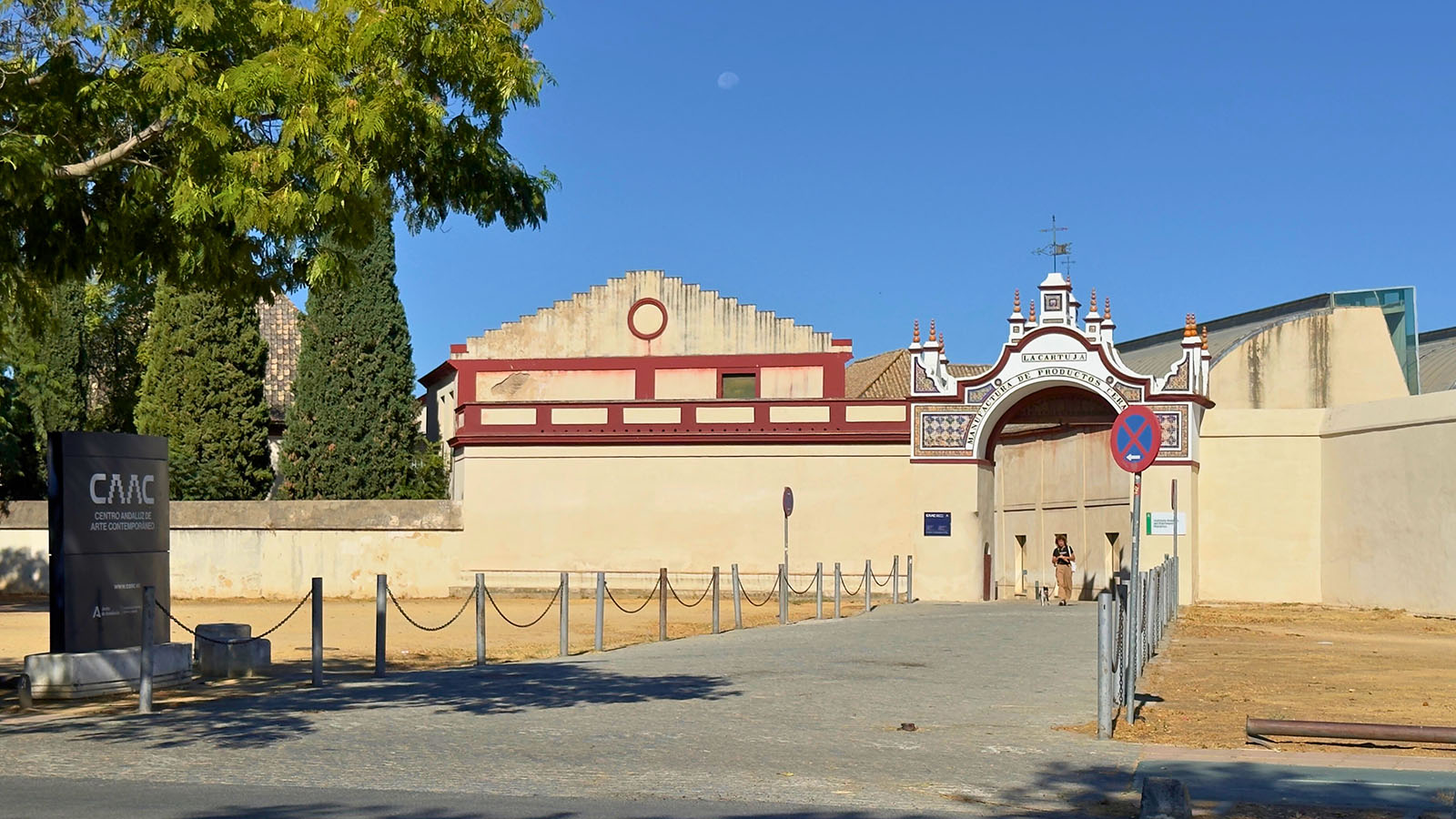
The island's only listed monument is the Monastery of Santa María de las Cuevas (or Monastery of La Cartuja). Founded in the 15th century, this former Carthusian monastery is an architectural gem, blending Gothic and Mudéjar styles. It is famous for having hosted Christopher Columbus, who prepared for his second voyage there. After its deconsecration in the 19th century, it was transformed into a renowned ceramics factory, Cartuja de Sevilla - Pickman, hence the industrial chimneys that still stand next to the cloisters. The site, fully restored for Expo 92, now houses the Andalusian Center for Contemporary Art (CAAC), thus merging history and contemporary creation.
Top 10 unmissable experiences
- Admire the contemporary art exhibitions at the CAAC in the Monastery of La Cartuja.
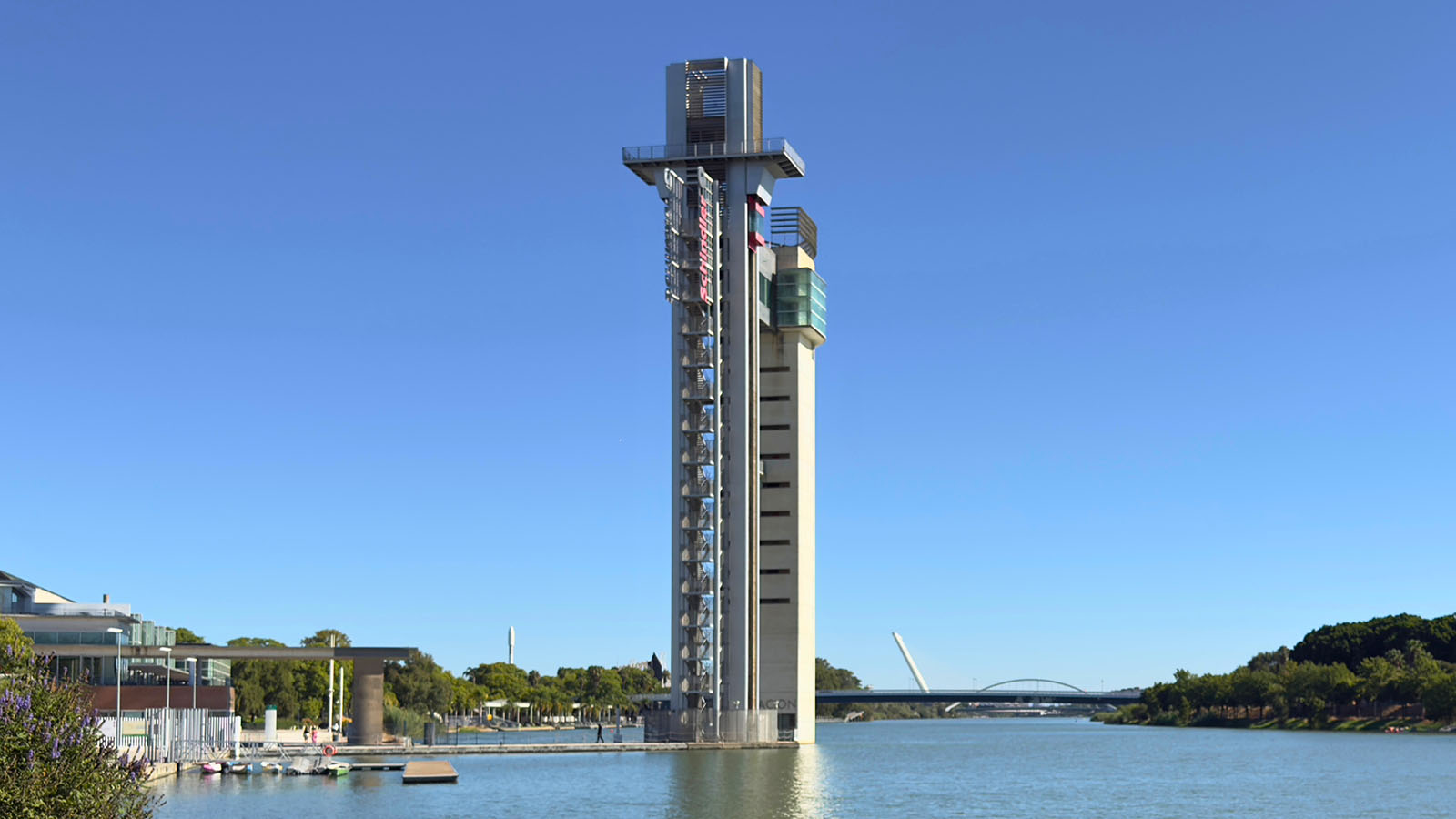
- Go up to the Schindler Tower viewpoint.
- Take a walk in Alamillo Park.
- Tracing Seville's maritime heritage at the Navigation Pavilion.
- Getting lost in the 1992 World Expo.
- Stroll through the botanical garden of the Jardin Americano.
- Have fun at Isla Mágica and Agua Mágica.
- Rent a kayak on the Guadalquivir.
- Attending a football match at the La Cartuja Olympic Stadium.
- Admire the sunset at Parque Fernando Magallanes.
Discover La Cartuja on foot: our suggested routes
The island of La Cartuja, with its wide avenues and parks, is an ideal place for a long walk, often cooler than the city center.
Route 1: Between heritage and adventure in Seville
This itinerary takes you through the most emblematic places on the island of La Cartuja, from historical symbols to modern feats and themed leisure activities.
📍 Step 1: The Cachorro Bridge (Puente del Cachorro)
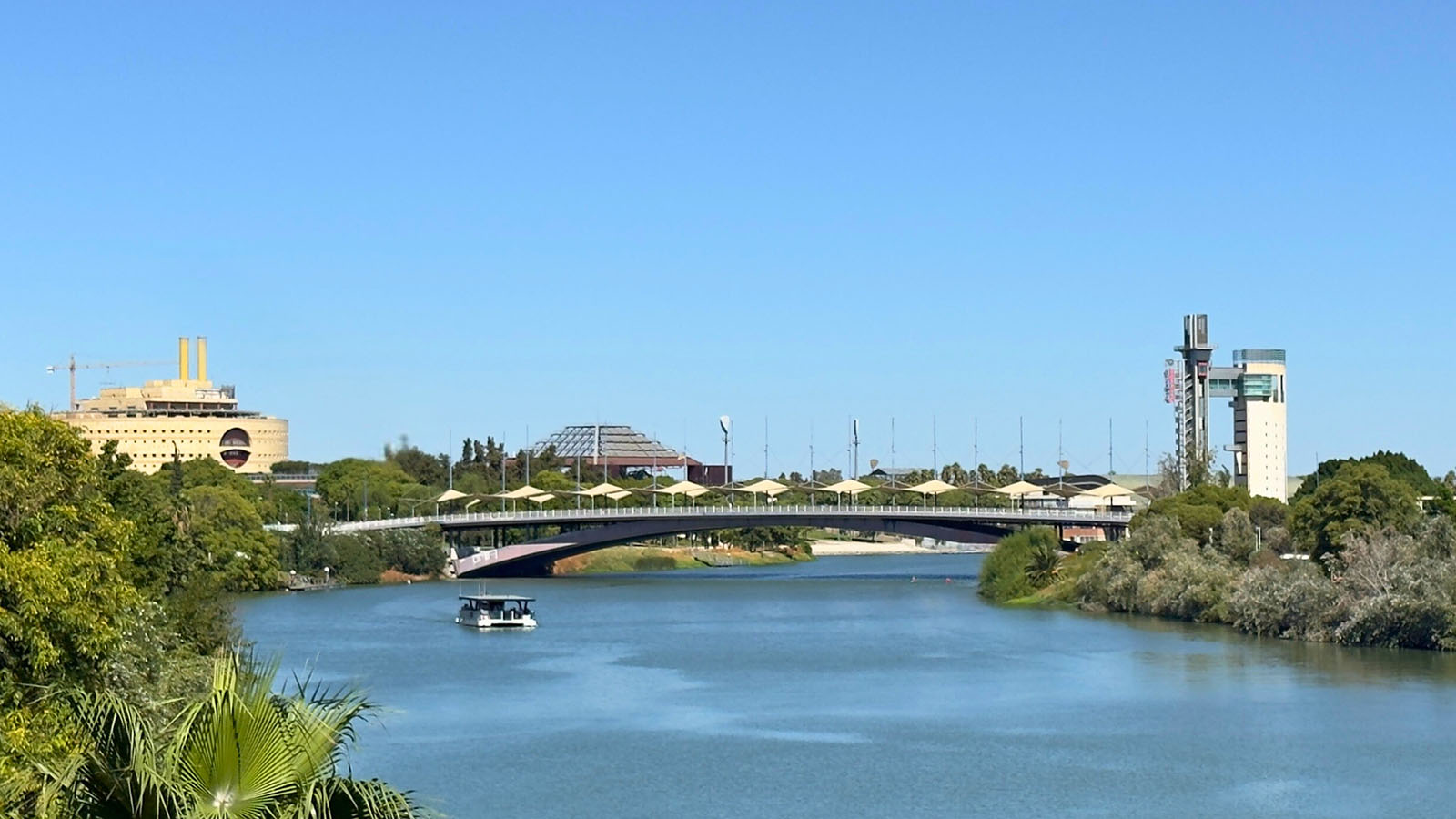
Begin your journey on the Puente del Cachorro (Cachorro Bridge), crossing the river to enter the island from the south, near the iconic Triana. Take a moment to appreciate the modern design of the bridge and the view of the water.
This bridge is named after Christ of Atonement, the famous Holy Week statue located in the nearby Triana chapel, often affectionately called El Cachorro. It is a gateway that directly connects religious fervor with the modernity of the island.
📍 Step 2: The Sevilla Tower (Torre Sevilla)
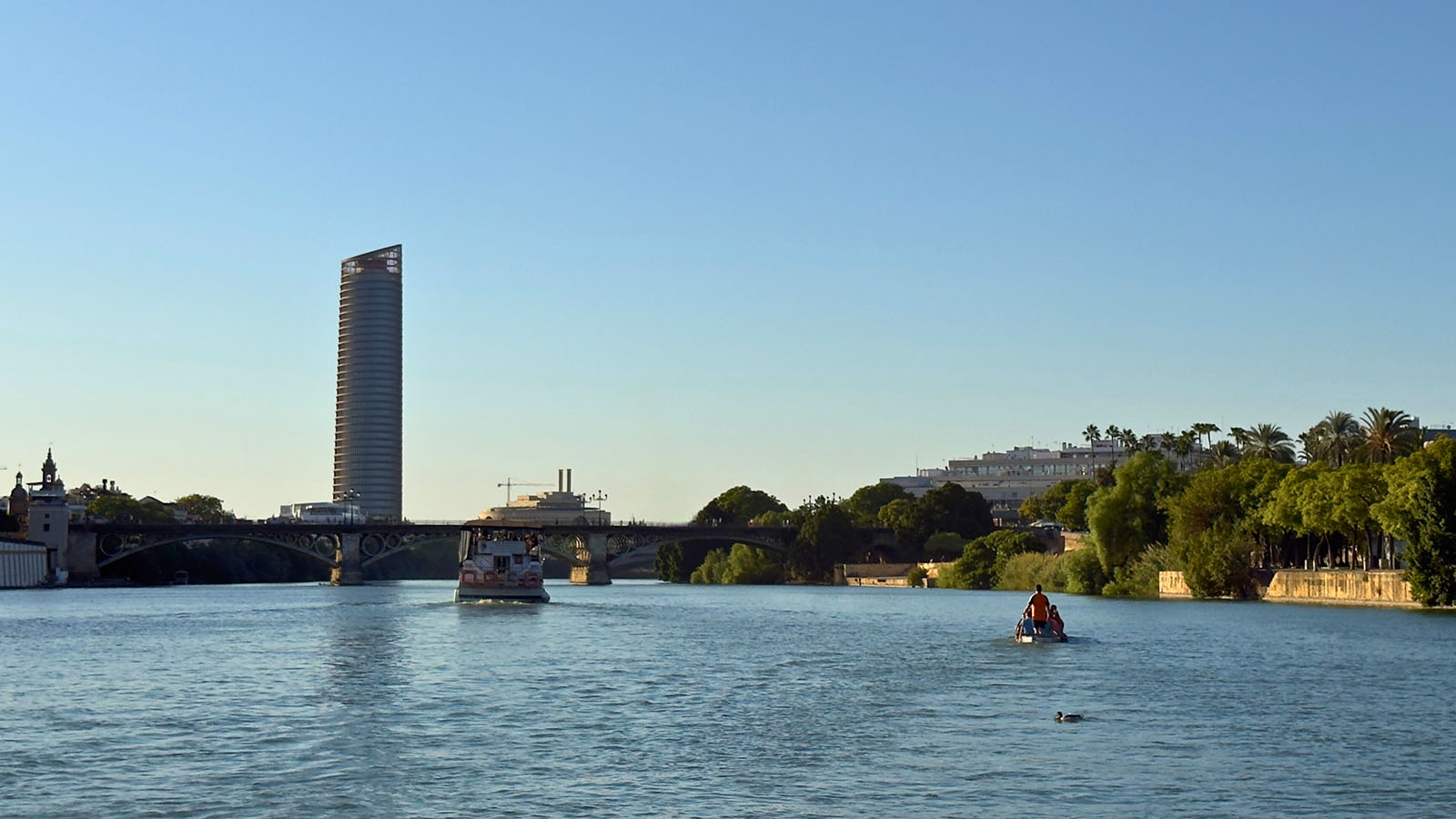
Continue south towards the imposing Torre Sevilla complex. This skyscraper, visible from almost anywhere in the city, is the first modern stop on your walk. It is surrounded by a shopping center and a landscaped park.
📍 Step 3: The Navigation Pavilion (Pabellón de la Navegación)
Follow the river north past the business center to reach the spectacular Navigation Pavilion, easily recognizable by its modern facade and tower: the Schindler Tower.
📍 Step 4: The American Garden (Jardín Americano)
Right next to the Pavilion, step into this unique park. This botanical garden was created for Expo 92 with plant species brought specifically from the Americas. It offers an unusual immersion into exotic flora in the heart of Andalusia. It's designed for a peaceful, shaded stroll, perfect for a refreshing break.
📍 Step 5: The Cartuja Monastery and the CAAC
Continue your walk north to reach this historical and cultural site on the island. The contrast between the centuries-old monastery walls and the contemporary art is striking.
📍 Stage 6: Isla Mágica
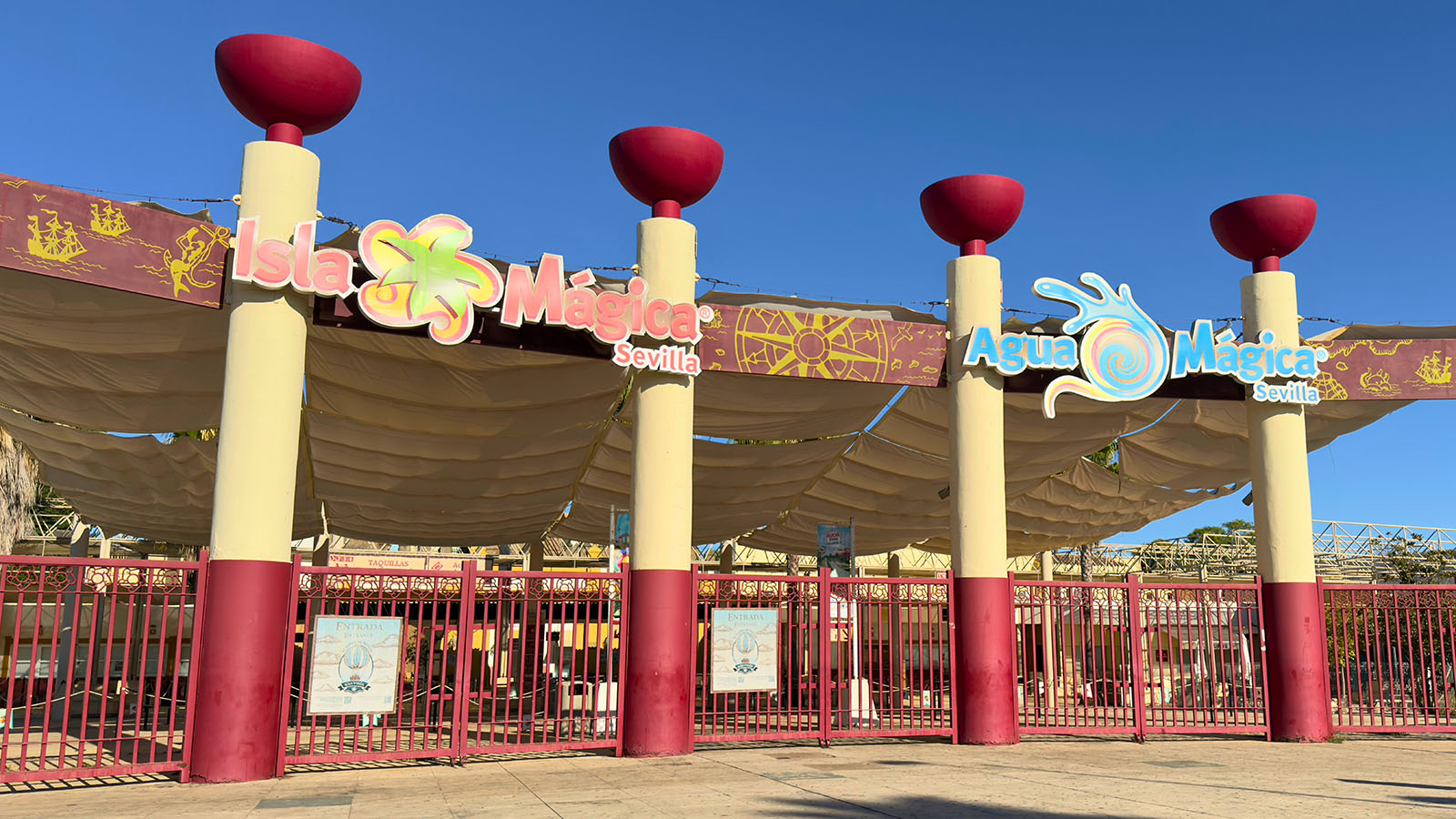
Complete your itinerary by heading to the north of the island, where you'll find the Isla Mágica theme park. This park is built on the former grounds of Expo 92. Each area of the park recreates atmospheres linked to the history of the great Spanish explorations. It's the perfect place to end your day with a dose of adventure and fun.
Route 2: On the way to Expo '92
This route focuses on the architecture of the 1992 Universal Exposition north of La Cartuja, the island's green lungs and innovation center.
📍 Stage 1: The Alamillo Bridge (Puente del Alamillo)
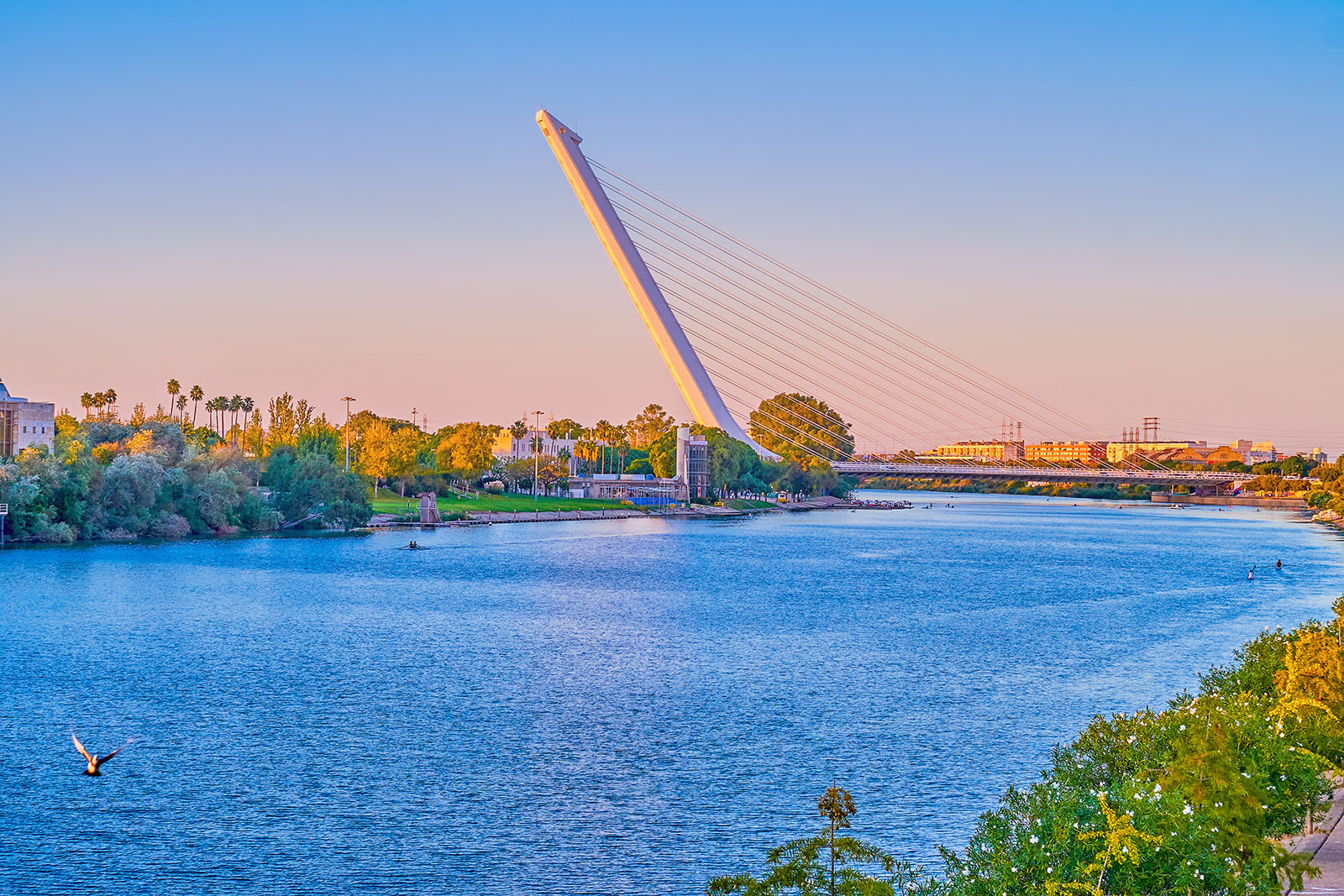
The Alamillo Bridge marks the northern starting point of your exploration. It is one of Seville's most famous architectural works.
Designed by the renowned Spanish architect Santiago Calatrava, this bridge is recognizable by its single, 142-meter-high inclined pylon, from which the cables extend to support the deck. Its asymmetrical design is meant to symbolize a ship ready to sail on the Guadalquivir River.
📍 Step 2: Alamillo Park (Parque del Alamillo)
Just after crossing the bridge, you enter this vast green space. The island's green lung, the 85-hectare Alamillo Park is an ideal place for relaxation, cycling, and outdoor recreation, far from the hustle and bustle of the city center. It was developed for Expo 92.
📍 Step 3: The Olympic Stadium of Seville (Estadio La Cartuja)
Head southwest to reach this immense arena. This 70,000-seat multipurpose stadium was built in 1999 for the World Athletics Championships and with the hope of hosting the 2004 Olympic Games. Today, it is a neutral venue used for major national sporting finals and large-scale concerts.
📍 Stage 4: The Cartuja PCT (Science and Technology Park)
Step into the island's technological and innovation heart. The PCT is the former Expo 92 site, transformed into a campus of businesses, research centers, and universities. It's here that the Expo's architectural legacy is best repurposed for the knowledge economy.
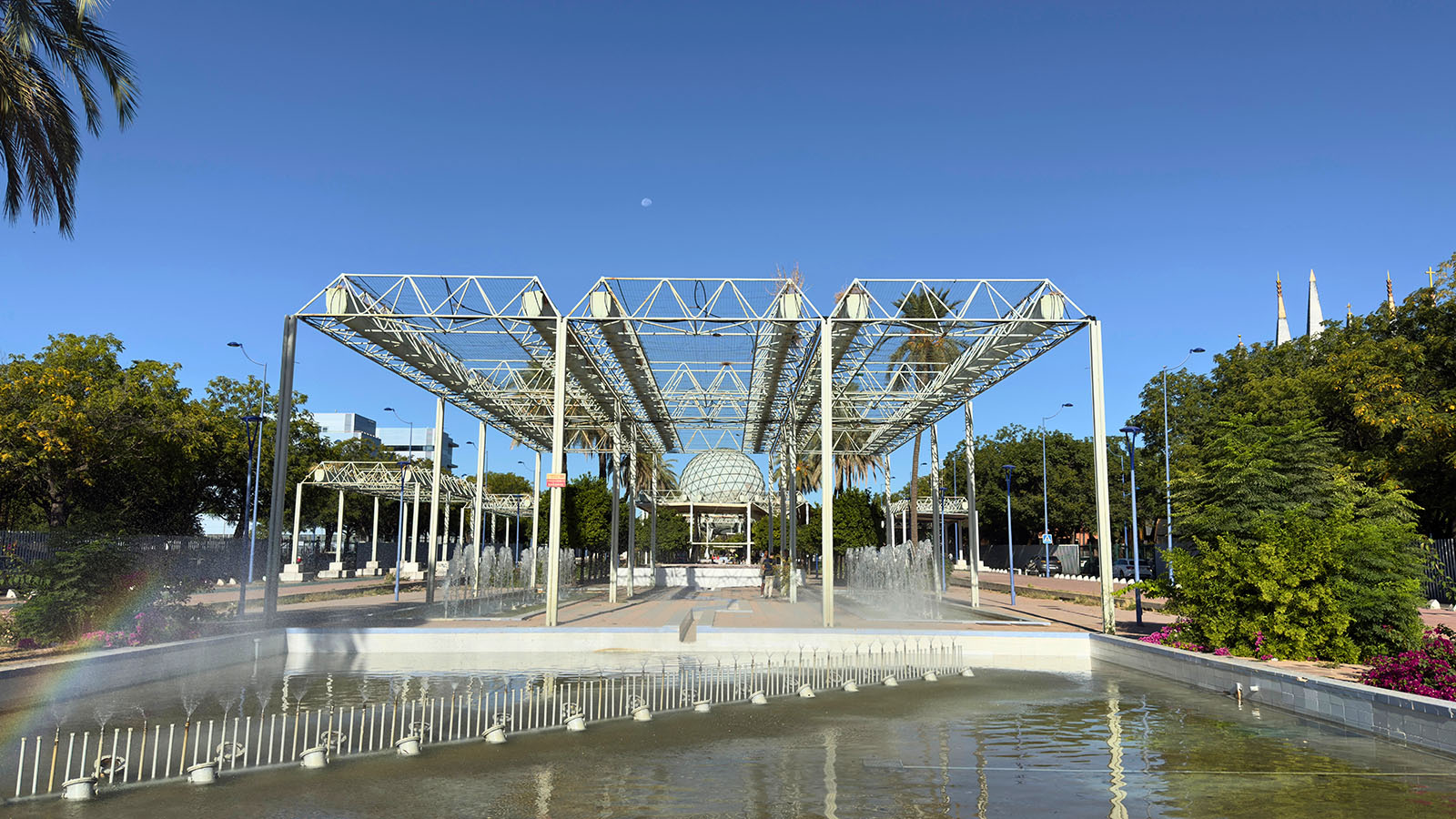
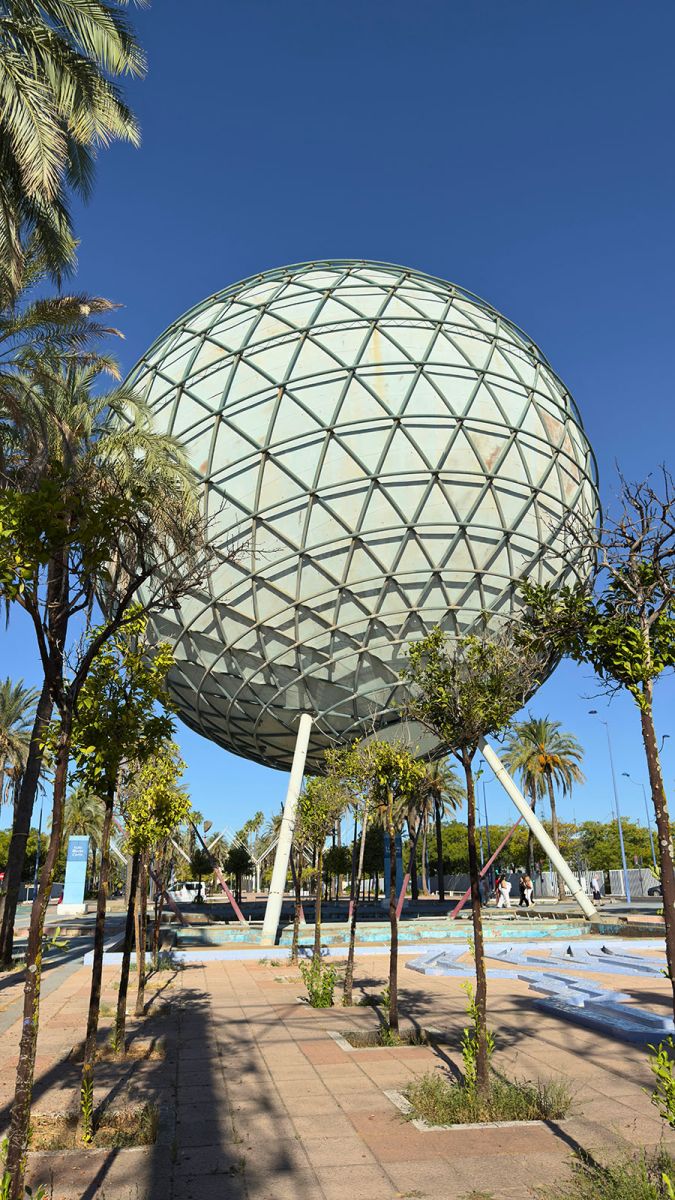
Don't miss the Bioclimatic Sphere, which, at the time of Expo 92, created a cool microclimate in an arid environment. Its partially glazed dome and spectacular shape make it an unmissable architectural relic.
📍 Step 5: Agua Mágica
If your visit takes place during the warmer months (generally from June to September), this stop is a must. It's the aquatic extension of Isla Mágica, offering a myriad of pools, artificial beaches, and water slides to cool off. It's a much-needed breath of fresh air under the Andalusian sun.
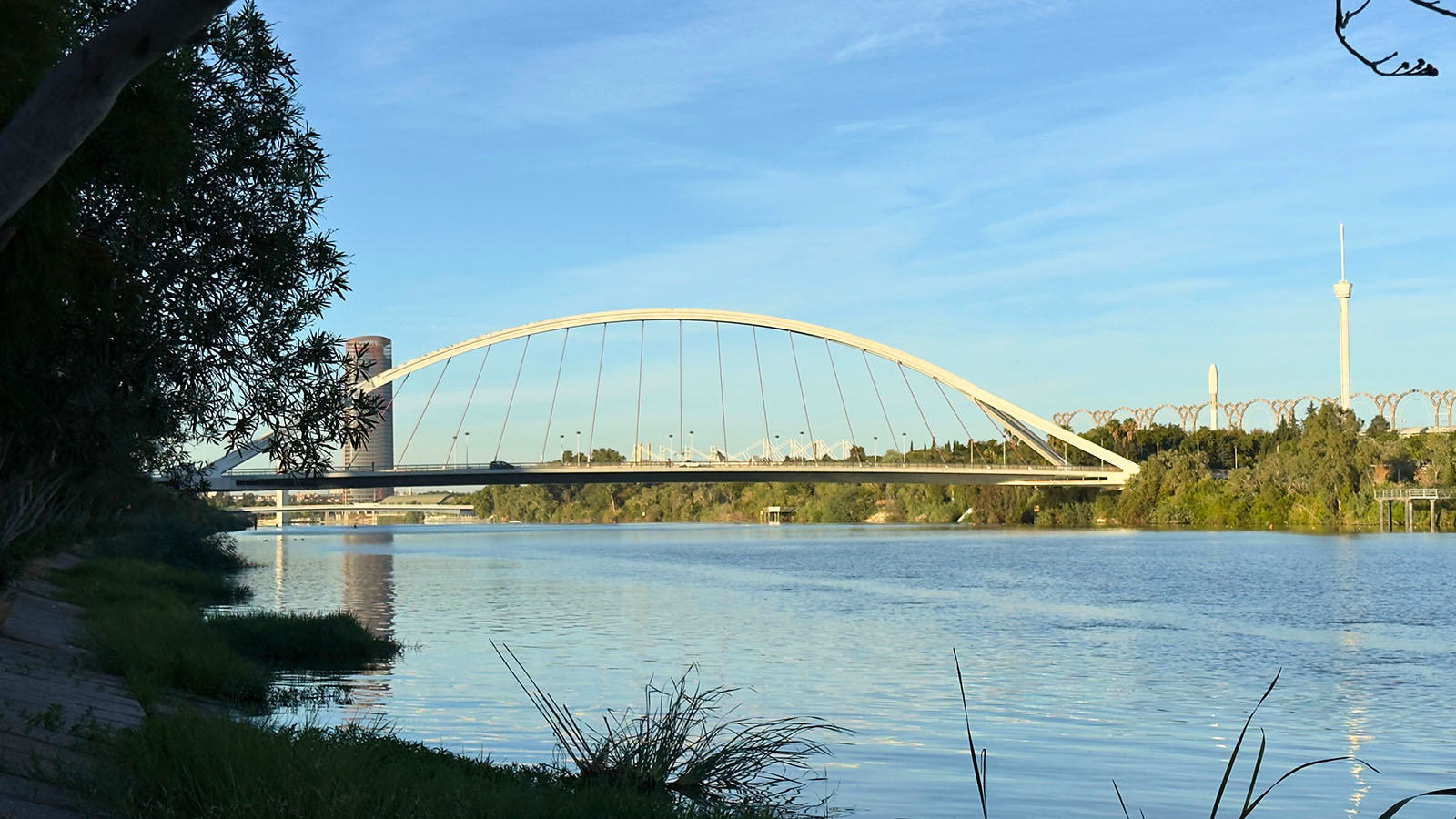
📍 Step 6: The Barqueta Bridge (Puente de la Barqueta)
Complete your route by joining the Barqueta Bridge, often called "Alamillo Footbridge" by locals, which marks the southern end of Alamillo Park.
This arched bridge, with its deck supported by cables, was also a major construction for the Exposition. It is particularly admired for its airy and elegant structure, which contrasts with the mass of the Alamillo.
Practical tips for visiting La Cartuja de Séville
La Cartuja is a district of unique scale in Seville, designed for a world event: Expo 92. Visiting it requires a different approach than visiting the historic districts.
Getting Around: Logistics is Key
Unlike the city center, La Cartuja is an island designed for mass transportation, with long distances and wide avenues.
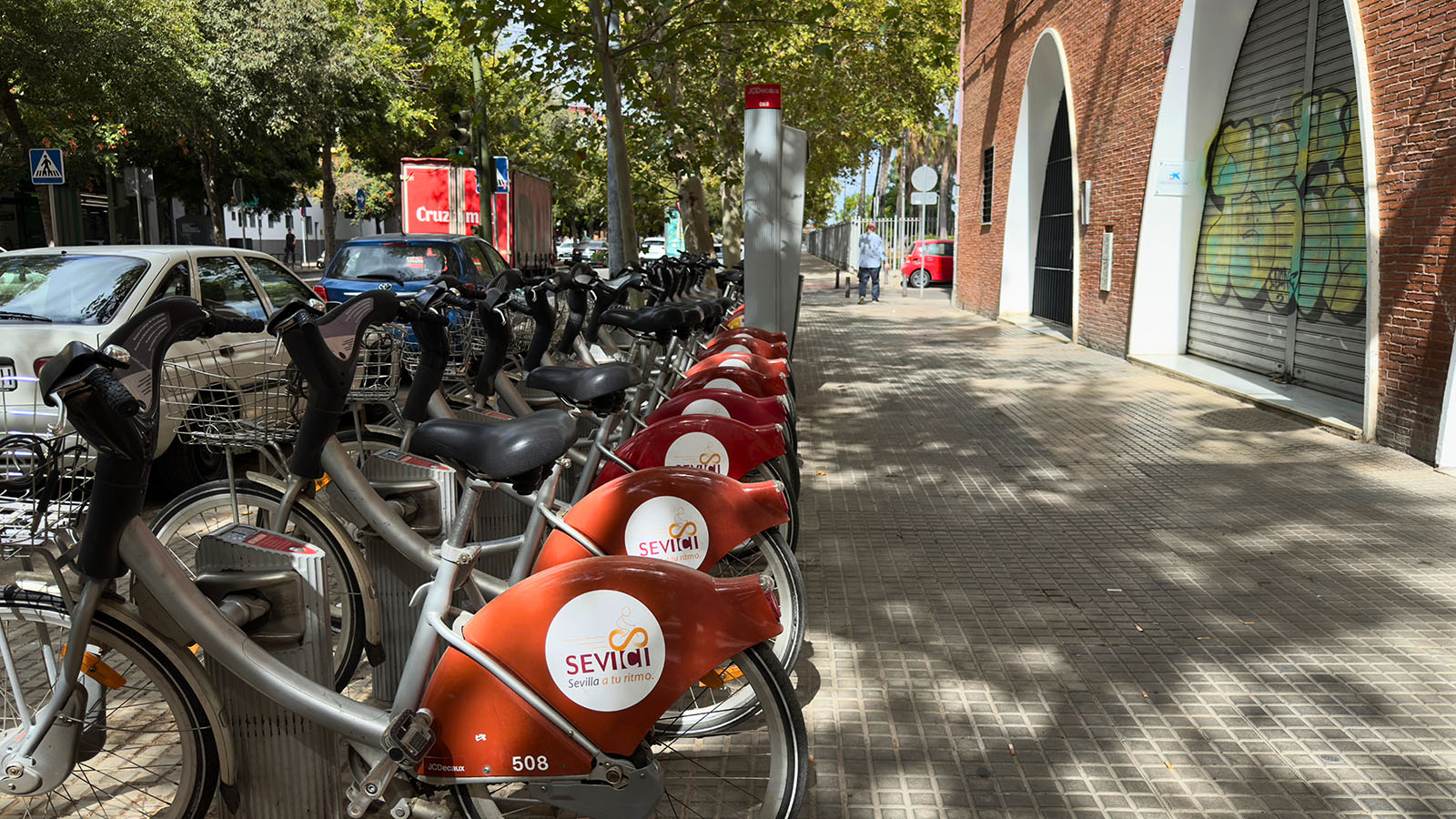
- La Cartuja is the most bike- friendly area in Seville. There are numerous cycle paths and wide, flat avenues. If you're coming from the city center, renting a bike (through the public service SEVICI or a private rental company) is the quickest and most enjoyable way to explore the entire island.
- Public transport is the most practical solution for those who don't want to walk long distances. Bus lines (especially the C1 and C2 lines in Tussam, which circle the island) serve the main points of interest such as the Monastery/CAAC and the Science and Technology Park.
- Walking from the city center to La Cartuja is possible (via the Triana Bridge, the Cachorro Bridge, or the Barqueta Bridge), but once there, be aware that the distances between the Monastery to the north and the Torre Sevilla to the south are significant. Focus on just one of the two suggested routes or use the buses/bikes within the neighborhood.
Managing the environment and schedules
The urban planning of La Cartuja is less dense than that of the center, which increases exposure to the sun.
- The Science and Technology Park (PCT) is a bustling business area during office hours (9:00 a.m. to 2:00 p.m. and 4:00 p.m. to 7:00 p.m. on weekdays). Avoid this area during your lunch break if you're looking for peace and quiet. On weekends, the PCT is very quiet, perfect for admiring the architecture without the hustle and bustle.
- The modern structures and bridges (Alamillo, Barqueta) are spectacular when illuminated. Nighttime river activities (kayaking or cruising) offer breathtaking views of the island's nighttime architecture.
Specific visit advice
- The Monastery and the CAAC : a visit to this historical and cultural site can take several hours, especially if you linger over the contemporary art exhibitions. The site often offers free tours in the late afternoon on certain days of the week (check the current schedule!).
- The American Garden : This garden can be your refuge for your midday break. Enjoy its shade and exotic vegetation, which contrast with the Andalusian landscape.
- The Olympic Stadium hosts major concerts and festivals (such as Iconica Fest). If you're a fan, check the local program for a unique experience on the island.
Top experiences
Caminito del Rey: a complete guide for an unusual experience in Andalusia